Something always needs fixing eventually — a garbage disposal that hums but won’t spin, an AC unit blowing warm air in August, a leaky faucet that’s more annoying than urgent. Knowing how the maintenance process actually works takes the guesswork out of it, whether you’re a brand-new resident or you’ve been in your unit for years.
How to submit a request
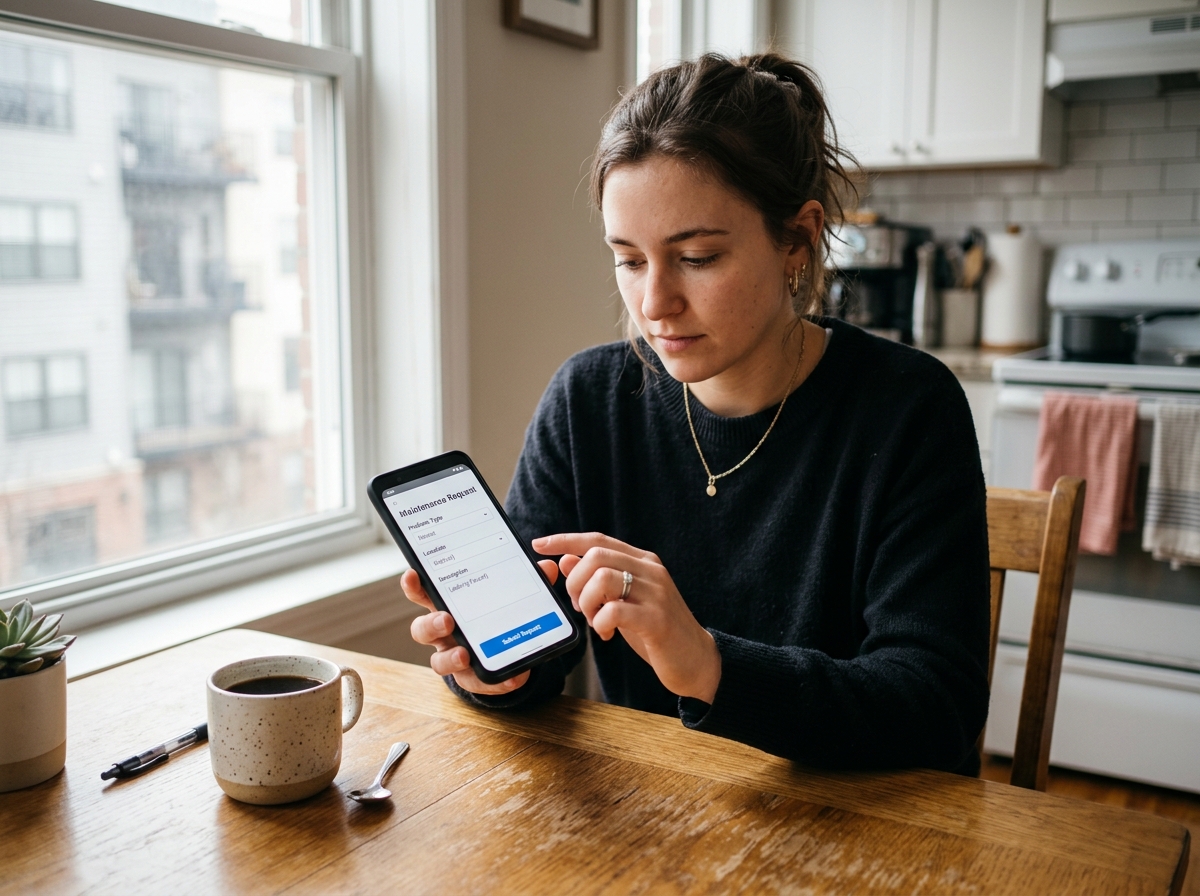
At every Apartments Near Me community, maintenance requests go through the resident portal first. Log in, describe the issue, and add a photo if you can — a picture of a dripping pipe or a cracked outlet cover tells the maintenance team more in five seconds than a paragraph of description. If the portal is down or you’d rather talk to someone, the property office can log the request over the phone during business hours.
For anything that can’t wait — no heat in winter, no AC in a heat wave, a burst pipe, no working smoke detector, a lockout, or anything involving gas or active water damage — call the property’s emergency maintenance line directly instead of using the portal. That number is posted in your lease packet and on the resident portal’s home screen. Emergency lines are answered around the clock, including weekends.
What counts as an emergency, and what doesn’t
Maintenance teams sort requests into three tiers. Emergencies get someone on-site within a few hours, day or night: think flooding, no heat below freezing temperatures, or a broken exterior door lock. Urgent issues — a refrigerator that’s stopped cooling, a toilet that won’t flush, one of two AC units failing — typically get addressed within 24 to 48 hours. Routine requests, like a squeaky cabinet hinge, a light fixture that needs a bulb the resident can’t reach, or a slow bathroom drain, are usually handled within 3 to 5 business days depending on the parts involved.
If a repair needs a part that has to be ordered, the technician will tell you that on the first visit and give you a rough timeline instead of leaving you guessing.
A few of those timeframes aren’t just company policy — they’re legal requirements. Habitability issues like no heat, no hot water, or a broken exterior lock generally have to be addressed within 48 hours under local housing code, regardless of what any individual lease says. Other repairs fall under a longer window, sometimes up to 30 days, and some cosmetic requests don’t carry a hard legal deadline at all. A responsible property still gets to those, just not on the same clock as a code-mandated repair. If a landlord sits on a request that does carry a legal deadline, the resident’s real recourse is code enforcement — that’s the mechanism built specifically to make a property act, not just another polite follow-up call.
What happens when the technician arrives
Submitting a maintenance ticket typically means you’re giving the property permission to enter the unit to complete that repair, even if you’re not home — but the details depend on the lease and the property. Some properties will call or text ahead with a specific window; others simply post a notice on the door before entering. Maintenance staff carry building identification and will knock and announce themselves before entering. If you’d rather be present for the visit, note that on the request and the office will schedule around your availability when possible.
Pets should be secured in a separate room or crated before a scheduled visit. Technicians aren’t allowed to handle animals, and an unexpected dog at the door is a safety issue for everyone involved.
A good maintenance visit shouldn’t leave a trace beyond the actual repair. Technicians bring their own tools and supplies and shouldn’t need to grab a resident’s mop, chair, or trash can to get the job done. The apartment should look the same when they leave as it did when they arrived — countertops wiped down, any mess from the repair itself cleaned up, nothing left out of place. If you’d rather they not walk through in their shoes, it’s reasonable to ask them to remove them at the door.
Making the request easier to fix on the first visit
A request that says “kitchen sink won’t drain, water backs up after about 30 seconds of running” gets fixed faster than one that just says “sink broken.” Include when the problem started, whether it’s constant or intermittent, and anything unusual you noticed right before it happened. Clear the area around the fixture or appliance ahead of time too — a maintenance tech shouldn’t have to move a stack of dishes or a full laundry basket to reach the water shutoff.
After the repair is marked complete in the portal, test it yourself within a day or two. If the issue comes back, reopen the same request rather than submitting a new one — it keeps the history attached so the second technician isn’t starting from zero.
Who to contact if something falls through the cracks
If a routine request passes its expected window without an update, a message to the property office is the right next step, not a second duplicate request. Each Apartments Near Me property has a dedicated property manager who can check the work order status directly and give you a real answer on where things stand.
After the repair is done
Once a ticket is closed, don’t be surprised if you get a follow-up call asking how the visit went. It’s a short, genuine check-in — did the technician show up when expected, did they fix the actual problem, did they leave the unit the way they found it. That feedback goes directly back to the maintenance team and shapes who handles the next call in your building.
Questions about your specific property or a ticket in progress? Reach out through apartmentsnearme.biz and the right property manager will follow up.